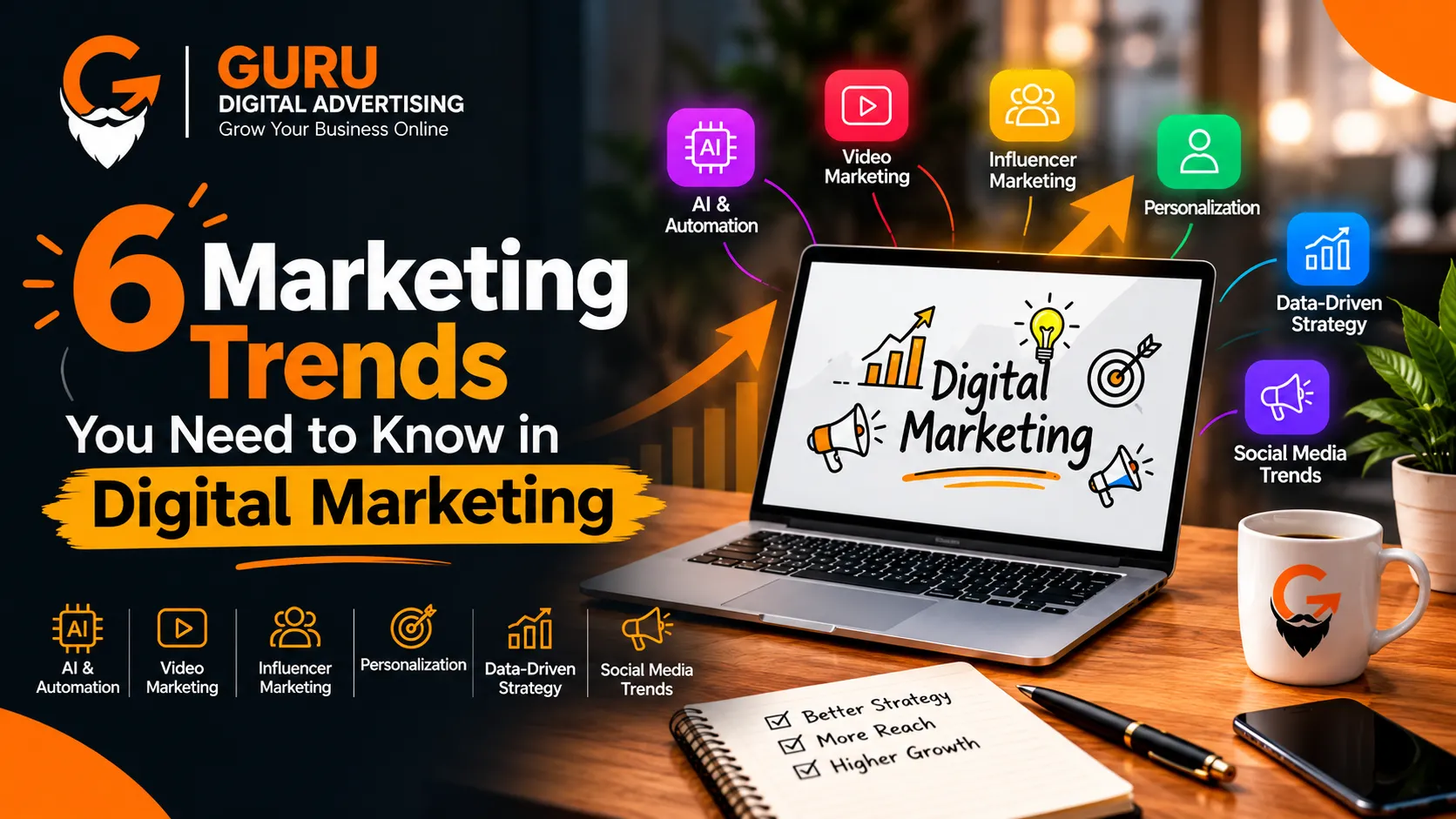
6 Marketing Trends You Need to Know in Digital Marketing
- What is a Marketing Strategy and Why Do You Need One?
- Top Marketing Trends 2026
- 1. AI-Driven Customization
- 2. Search Optimization for AI Overviews & Answer Engines (AEO)
- 3. Short-Form Video & Micro-Content Dominance
- 4. Audience-Centric & Influencer-Driven Marketing
- 5. First-Party Data & Data Privacy Strategy
- 6. Omnichannel Consistency & Smart Automation
- Summary Checklist: Key Action Steps
- Frequently Asked Questions
In the age of rapid communication, knowing what's trending in marketing isn't just helpful—it's necessary for your business to grow. Americans are more informed, faster and more intentional than they have ever been before. What might have been a profitable technique in Facebook advertising or Google searches a couple of years ago might no longer work.
Where do you invest time, energy, and money? AI? Short videos? Hyper-personalized emails? Let us keep it simple and get straight to the list: here are the 6 most important digital marketing trends you should be aware of. Implement these tips now and you will have improved bonds with your customers, increased website conversions, and a steady return on investment.
What is a Marketing Strategy and Why Do You Need One?
A marketing strategy is the mapping of where a business will go and how they will get there. A good strategy helps a business identify where they need to go and whether they can actually get there. To raise a brand, promote a service or product, you must understand your customers, engage with them using relevant channels, and provide the content that your target audience needs. Without a business strategy, you will waste both time and money without achieving results. A marketing strategy helps you gain brand awareness and build relationships with future consumers. A digital marketing agency in the USA researches the market to understand your customers' needs and develops strategies to help you grow long-term.
Top Marketing Trends 2026
1. AI-Driven Customization
Artificial Intelligence is no longer just a futuristic buzzword. Today, it forms the engine behind high-performing digital marketing campaigns across the US. However, the key shift isn't just using AI to generate quick text—it's using AI to deliver hyper-personalized customer experiences.
What Changed?
Generic advertising messages are no longer desired by consumers. They anticipate that brands will be aware of their unique tastes, prior purchases, and browsing patterns.
How Businesses Are Using It
- Smart Content Delivery: Visitor clicks are used to adjust recommended product suggestions on pages.
- Intelligent Email Timing: Email software delivers discounts and deals at the right moment based on user behaviour.
- AI-Powered Assistants: AI chatbots can address complex customer questions at any time, just like a human would.
2. Search Optimization for AI Overviews & Answer Engines (AEO)
Traditional SEO has evolved; the focus has now shifted toward preparing content for AI overviews and answer engines, ensuring that it appears directly within AI-generated summaries or chatbot responses. Since AIO (AI Optimization) and conversational tools provide direct answers, marketers should optimize their content for AEO (Answer Engine Optimization).
Why This Matters for US Businesses
When a user searches via a mobile device or voice command, they receive a direct answer in the AI overview. The user never even reaches the traditional blue links.
- Focus on Search Intent: Write content directly for the user. Ensure your responses are authoritative and provide direct answers to the customer's specific questions.
- Use Structured Data (Schema Markup): Schema markup helps Google recognize your content and provides details about a business's location, services, pricing, and entity information.
- Build First-Party Authority: Share original data and customer case studies. If your content is driven by customer intent, it is extremely valuable and may be used by AI tools.
3. Short-Form Video & Micro-Content Dominance
Nowadays, video content is considered the best for driving conversions. If you have a 1,000-word piece of content, creating a 30-second video based on it will make the content far more engaging. People are more likely to stop and watch, which boosts impressions and increases chances of a higher conversion rate. You can leverage short-form video platforms like Instagram Reels, TikTok, YouTube Shorts, and LinkedIn, as Google places significant weight on content from these platforms.
4. Audience-Centric & Influencer-Driven Marketing
The cost of advertising on digital platforms fluctuates constantly; therefore, businesses focus on building partnerships with their communities and content creators to expand their reach. By leveraging content, they strive to drive business growth, which boosts both conversions and brand awareness.
| Strategy | Traditional Influencer Ads | Community-First Marketing |
|---|---|---|
| Focus | Mass reach via celebrity endorsement | Niche authority & direct dialogue |
| Trust Factor | Low to moderate | High (peer-to-peer recommendation) |
| Long-Term Value | One-time promotional spike | Continuous customer retention & loyalty |
Micro-Influencers
Micro-influencers are social media content creators on YouTube, TikTok, Instagram, etc. who have an account size of between 10,000 and 100,000 followers and cover a very niche topic area (beauty, travel, fitness, fashion, digital marketing, etc.). Their audiences tend to trust them more because it feels real and authentic.
- Build awareness
- Increase customer trust
- Generate quality leads
- Improve engagement
- Drive sales and conversions
User-Generated Content (UGC)
UGC is any type of content created by users or customers who share their story about a brand, product, or service—including videos, images, reviews, testimonials, social media content, and product demos. For example, if a customer uploads a reel on Instagram showing how they use a skincare product and shares their honest opinion, that is UGC.
Private Groups & Newsletter Hubs
An online community is a virtual group of people that share common interests, needs, or business goals. Online communities are created on Facebook, LinkedIn, WhatsApp, and Slack to build deep, loyal relationships with your audience.
5. First-Party Data & Data Privacy Strategy
Across the United States, privacy regulations have become quite stringent—from the laws in California to those at the state level. Major web browsers have also phased out third-party cookies. This means one thing: businesses can no longer rely on third-party audience data. It is now essential for them to own their customer data.
- Value-Exchange Lead Magnets: Collect email addresses through website sign-up forms, customer surveys, or newsletter subscriptions. This allows a company to better serve clients with targeted products, services, and promotions.
- Interactive Surveys & Quizzes: Engage your audience and gather first-party insights about their preferences and pain points directly.
- Custom CRM Lead Tracking: Use a CRM system to track customer interactions, purchase history, and on-site interests to deliver more relevant experiences.
6. Omnichannel Consistency & Smart Automation
Omnichannel marketing is about linking all digital channels—your website, social media, email, WhatsApp, and store—to connect with the customer for a seamless experience. Your brand messaging, service level, and customer experience must be consistent across all channels.
"Smart automation" is becoming increasingly common in US businesses to help increase growth. Business owners on a larger scale use automated marketing activities to help them work more efficiently.
Real-World Example
Someone visits Guru Digital Advertising and asks about SEO services. They then see a social media post from your company and receive a helpful follow-up email. If the content and experience are the same—seamless and unified—across all of the above channels, this is what we call "omnichannel marketing."
Summary Checklist: Key Action Steps
| Marketing Trend | Quick Business Action Item |
|---|---|
| 1. AI Personalization | Add smart email automation based on customer actions. |
| 2. Answer Engine SEO | Add clear FAQ sections and Schema Markup to key service pages. |
| 3. Short-Form Video | Post 2–3 short reel/video clips weekly answering buyer questions. |
| 4. Community & UGC | Collect video testimonials from satisfied clients. |
| 5. First-Party Data | Launch an interactive lead magnet to capture customer emails directly. |
| 6. Omnichannel Setup | Sync your ad platforms, Google profiles, and website design. |
Grow Your Business With Proven Digital Marketing Trends
Ready to implement AI personalization, short-form video, influencer marketing, and omnichannel automation for your business? Partner with Guru Digital Advertising for a tailored digital marketing strategy that delivers real results.
Contact our digital marketing experts today for a comprehensive growth strategy consultation.
Get Started With a Custom Marketing Strategy — Contact UsFrequently Asked Questions
What are the top 6 marketing trends in digital marketing?
The top 6 digital marketing trends are: AI-Driven Customization, Answer Engine Optimization (AEO), Short-Form Video Dominance, Influencer & Community Marketing, First-Party Data Strategy, and Omnichannel Consistency with Smart Automation. These trends help businesses better understand customer needs, improve visibility, and drive higher conversions.
Why are digital marketing trends important for businesses?
Digital marketing trends provide insight into how customer behaviour and marketplace requirements are changing. This insight helps a business formulate effective marketing strategies to know their targeted market and audience better. Whether it is through short video or personalized email, knowing the latest digital marketing trends can have a positive effect on a business's growth and ROI.
How does artificial intelligence help in digital marketing?
Artificial Intelligence allows marketers to create content ideas, gather insight into the customer journey, analyze data, and identify repetitive tasks to make automation easier. AI can be used to create personalized marketing materials and answer customer questions more accurately and efficiently. Always fact-check and verify the accuracy of AI-produced content before publishing.
How can small businesses use the latest digital marketing trends?
Small businesses can begin by producing engaging social media content, implementing local SEO, gathering customer reviews, and sending valuable email newsletters. It's not about trying every new strategy—it's about selecting the right ones that reach your target market and accomplish your objective to provide the best return on investment. Experiment and measure to learn what drives the most customers.
How does personalized marketing improve customer engagement?
Personalized marketing sends content, offers, and messages that closely relate to actual customer needs and preferences. For instance, an eCommerce site can push related products based on what a consumer has purchased or viewed online. This makes communication relevant and more useful, which builds trust and encourages purchase decisions.
How can businesses measure the success of digital marketing trends?
By checking website and social media traffic, email open rates and clicks, qualified leads, conversions, and sales. The metrics that matter most depend on your marketing goal. A business using direct sales as a goal will want to track the number of inquiries that convert to paying clients.
Ready to Accelerate Your Digital Growth?
Speak directly with our senior growth strategists. We audit your campaigns, identify conversion bottlenecks, and provide an actionable roadmap.
Book a Strategy Consultation