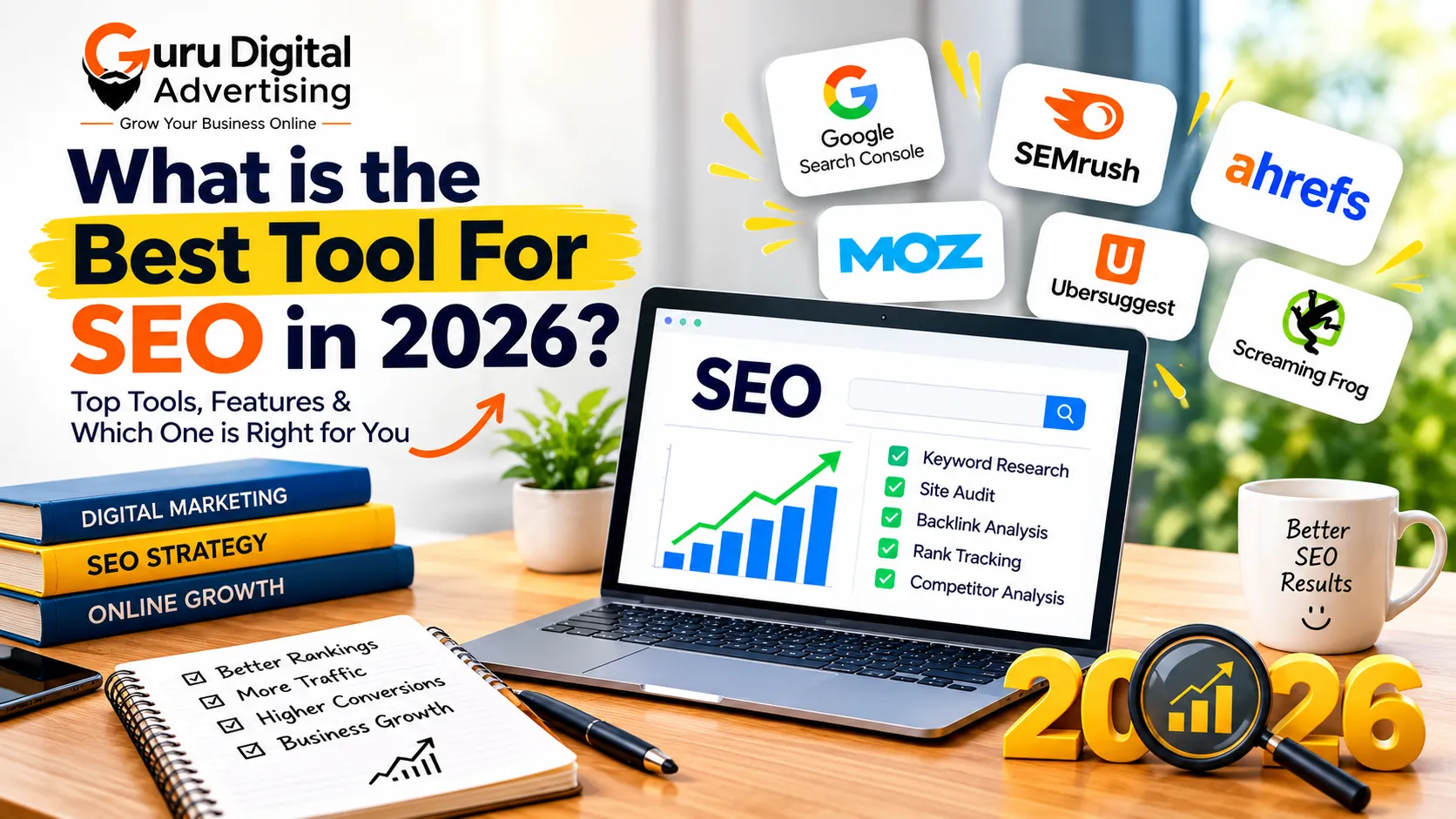
There are so many SEO tools available in the market. But overall Semrush is the best SEO tool in 2026 because it has so many qualities which it contains with itself. This is no longer just a keyword look-up tool. In 2026, Semrush is a complete digital marketing dashboard that blends SEO, content strategy, competitor analysis, and even AI search visibility right into one view. Digital marketing agencies are already using Semrush for their business. But there's a big difference between having a Semrush subscription and actually putting it to use. Too many marketers use Semrush for gathering complete results of any website.
This comprehensive guide explains the step-by-step process of mastering Semrush in 2026 to transform raw SEO data into real organic traffic, qualified leads, and top Google rankings.
Why Semrush Still Matters in 2026
Semrush is an AI-based digital marketing platform featuring more than 55 tools in SEO, content marketing, social media management, paid advertising, and visibility across AI-enabled search results. That final point is what sets 2026 apart from all previous years. Search has moved beyond traditional Google blue links—users now learn about brands through AI-powered chat tools and AI-generated content, and Semrush has directly responded.
As of 2026, Semrush has integrated advanced AI capabilities such as smarter keyword clustering, AI writing assistance, and predictive traffic insights that place the entire platform squarely into the AI-powered marketing world. For agencies and business owners, it has become less about tracking isolated keyword positions and more about keeping up with your audience wherever they search.
Step 1: Start With a Full Site Audit
Jump to new rankings only after you identify what is blocking your current ones. Semrush's Site Audit tool scans your website and provides a granular health score highlighting critical technical issues:
Perform this audit on a regular basis—not just once. Search engines reward websites that maintain technical cleanliness, and minor issues compound over time. Always prioritize errors over warnings, and resolve warnings before notices.
Step 2: Do Keyword Research
Most marketers begin with keyword research in Semrush, yet what works in 2026 is not simply typing in a single seed keyword and picking the first dozen suggestions.
With a database exceeding 25+ billion keywords, Semrush provides abundant data to build an authoritative, intent-driven content strategy. To execute effectively:
- Focus On Search Purpose & Intent: Target specific, intent-rich queries like "Best CRM software for small teams" rather than vague high-volume terms that attract unqualified clicks. Categorize terms by intent: informational, navigational, commercial, and transactional in Semrush.
- Apply Keyword Magic Tool for Topic Clusters: Instead of building fragmented single pages for each minor variation, cluster related terms into cohesive topic hubs. Search engines prioritize pages demonstrating holistic topical authority.
- Align Keyword Difficulty With Domain Strength: A brand-new site targeting a 70%+ Keyword Difficulty (KD) query will struggle, whereas an established domain can compete easily. Target achievable KD thresholds while building topical authority.
- Analyze SERP Features: Check whether the query generates Featured Snippets, Local Packs, Video Carousels, or People Also Ask boxes to structure your content format to capture high-visibility real estate.
Step 3: Analyze Your Competitors
Competitive intelligence is Semrush's most powerful asset. Through deep advertising research and real-time traffic analysis, the platform provides unmatched transparency into competitor strategies.
To use competitor analysis effectively:
1. Identify Real Organic Rivals
Use the Organic Research tool to uncover domains actually ranking for your target keywords—not just the legacy brands you assume are your rivals. You may discover emerging competitors outranking you on key commercial queries.
2. Reverse Engineer Top Performing Pages
Inspect which URLs drive the highest proportion of organic traffic to your competitors. Analyze what makes those pages succeed—depth of content, UX structure, schema markup, or backlink profile.
3. Exploit Keyword Gaps
The Keyword Gap tool reveals valuable keywords your competitors rank for, but your site does not. These keyword gaps represent the quickest opportunities for immediate content expansion.
4. Track Referring Publication Sources
Discover which industry blogs, directories, podcasts, and digital PR outlets link to your rivals. If an authoritative publisher has linked to a competitor's resource, they are prime candidates for your own outreach.
Step 4: Build a Backlink Strategy With Backlink Analytics
Backlinks remain one of Google's strongest ranking signals, and Semrush's Backlink Analytics and Link Building tools eliminate the guesswork from off-page SEO:
- Audit Your Existing Backlink Profile: Identify and disavow toxic, spammy, or penalized links before they trigger algorithmic suppression.
- Utilize the Backlink Gap Tool: Pinpoint authoritative websites linking to multiple competitors but not yet linking to your business.
- Configure Brand Monitoring: Discover unlinked brand mentions across the web, reach out to authors, and convert existing brand equity into valuable editorial links.
- Track Weekly Link Velocity: Monitor newly acquired and lost links each week so you can immediately investigate and reclaim lost high-value backlinks.
Quality matters far more than quantity. A handful of relevant, contextual links from authoritative domains will produce exponentially better results than hundreds of low-tier directory submissions.
Step 5: Use Content Marketing Tools to Create What Actually Ranks
Semrush's SEO Writing Assistant and Topic Research tool streamline the content creation workflow for teams targeting top-tier rankings in 2026:
Topic Research Tool
Uncover subtopics, trending questions, and mind maps representing exactly what searchers want answered. Covering these adjacent questions ensures your content satisfies comprehensive search intent in one place instead of leaving gaps competitors can fill.
SEO Writing Assistant (SWA)
Scores drafts in real time against top 10 SERP competitors across readability, tone of voice, originality, and semantic keyword integration. Use it as a quality benchmark without sacrificing natural human tone.
Content Audit & Optimization
Pinpoints decaying or underperforming URLs across your site. Refreshing, merging, or updating existing posts is often significantly faster and more cost-effective than writing new articles from scratch.
Step 6: Don't Ignore AI Visibility Tracking
This is the defining feature separating modern 2026 SEO workflows from outdated playbooks. Semrush now monitors brand visibility and citations across generative AI search platforms—including ChatGPT, Google Gemini, and Perplexity—alongside conventional search engines.
As conversational AI interfaces answer user queries without traditional link clicks, brand presence within AI summaries directly impacts commercial discovery:
The most dependable way to earn AI citations is to publish well-structured, authoritative, factually backed content that demonstrates verified E-E-A-T principles.
Step 7: Make Data Available in Reports Clients and Stakeholders Recognize
While Semrush is celebrated for its deep diagnostic capabilities, its automated reporting infrastructure is an indispensable agency asset. Generating white-label, client-ready reports bridges the gap between raw metrics and commercial ROI.
Set up automated monthly performance reports aggregating keyword position changes, organic traffic growth, technical health improvements, and completed deliverables. Clean data visualization ensures stakeholders understand campaign momentum at a glance for less technical clients.
Common Mistakes to Avoid With Semrush
Even seasoned digital marketers frequently fall into common optimization traps:
- Chasing Vanity Volume Over Intent: Prioritizing high search volume while ignoring commercial intent and realistic keyword difficulty.
- One-Time Site Audits: Treating technical SEO as a one-time setup rather than conducting continuous recurring site hygiene.
- Set-and-Forget Tool Usage: Maintaining a costly subscription without reviewing weekly keyword movements, competitive shifts, and newly surfaced opportunities.
- Ignoring AI Search Visibility: Disregarding Generative Engine Optimization (GEO) and Answer Engine Optimization (AEO), losing vital modern search share.
Final Thoughts
To use Semrush successfully in 2026, leverage it as an integrated ecosystem rather than a collection of disconnected features. Establish a solid technical foundation, research keywords aligned with genuine user intent, reverse-engineer top competitor strategies, earn high-quality editorial backlinks, publish authoritative content, and measure visibility across both traditional and AI-driven search engines. A leading SEO Agency in USA uses Semrush to manage and execute every SEO campaign with precision.
By treating Semrush as an interconnected system, you build sustainable organic momentum, establish durable domain authority, and secure long-term revenue growth that endures search engine evolutions.
Unlock Data-Driven SEO Growth With Guru Digital Advertising
Want to turn deep SEO analytics into predictable organic traffic and revenue? Partner with Guru Digital Advertising for end-to-end technical site audits, competitor intelligence, high-intent keyword clustering, and AI visibility optimization.
Contact our SEO specialists today for a comprehensive organic growth assessment.
Get Started With Proven SEO Strategies — Contact UsFrequently Asked Questions
Will Semrush be worth it in 2026 for a small business or solo professional?
Yes, if you actively use it! The power of Semrush is in regular use (keyword tracking, audits, competitor research) rather than intermittent searches. Start out with the Site Audit, Keyword Magic Tool, and Position Tracking for your small business, as they give the quickest practical advantage without all the bells and whistles.
How frequently do I need to run a Site Audit in Semrush?
Monthly reporting is a good starting point for most sites, with weekly reporting for sites with frequent content updates or recent web design overhaul. Tackle technical problems such as page errors or long load times before they start damaging your rankings.
What's the difference between Semrush's Keyword Difficulty score and search intent?
Keyword Difficulty estimates how hard it is to rank for a term based on competition, while search intent tells you why someone is searching — to learn something, compare options, or buy. A keyword can have low difficulty but weak intent (won't convert), or high difficulty but strong intent (worth the effort). Effective keyword research weighs both, not just difficulty alone.
Can Semrush help with ranking in AI tools like ChatGPT or Gemini, not just Google?
Yes — Semrush's AI visibility tracking monitors whether and how often your brand appears in AI-generated answers across tools like ChatGPT, Gemini, and Perplexity. It won't directly control those results, but it helps you identify content gaps and track whether your visibility is improving as you publish more authoritative content.
How many keywords is enough for SEO?
Not just one keyword on a page, a group of related keywords around one topic. Use tools like Semrush's Keyword Magic Tool and Topic Research tool to easily group related search terms on one page so you're delivering information about a complete topic - not just one narrow one.
Is Semrush better than Ahrefs for agencies in 2026?
For most agencies, Semrush offers a broader toolkit — SEO, PPC research, content tools, social media management, and AI visibility — plus white-label reporting that's especially useful for client-facing work. Ahrefs still holds an edge in backlink data freshness, so agencies focused heavily on link building sometimes use both tools side by side.